Digital Hvac Vacuum Gauge Explained: A UK Buyer's Guide
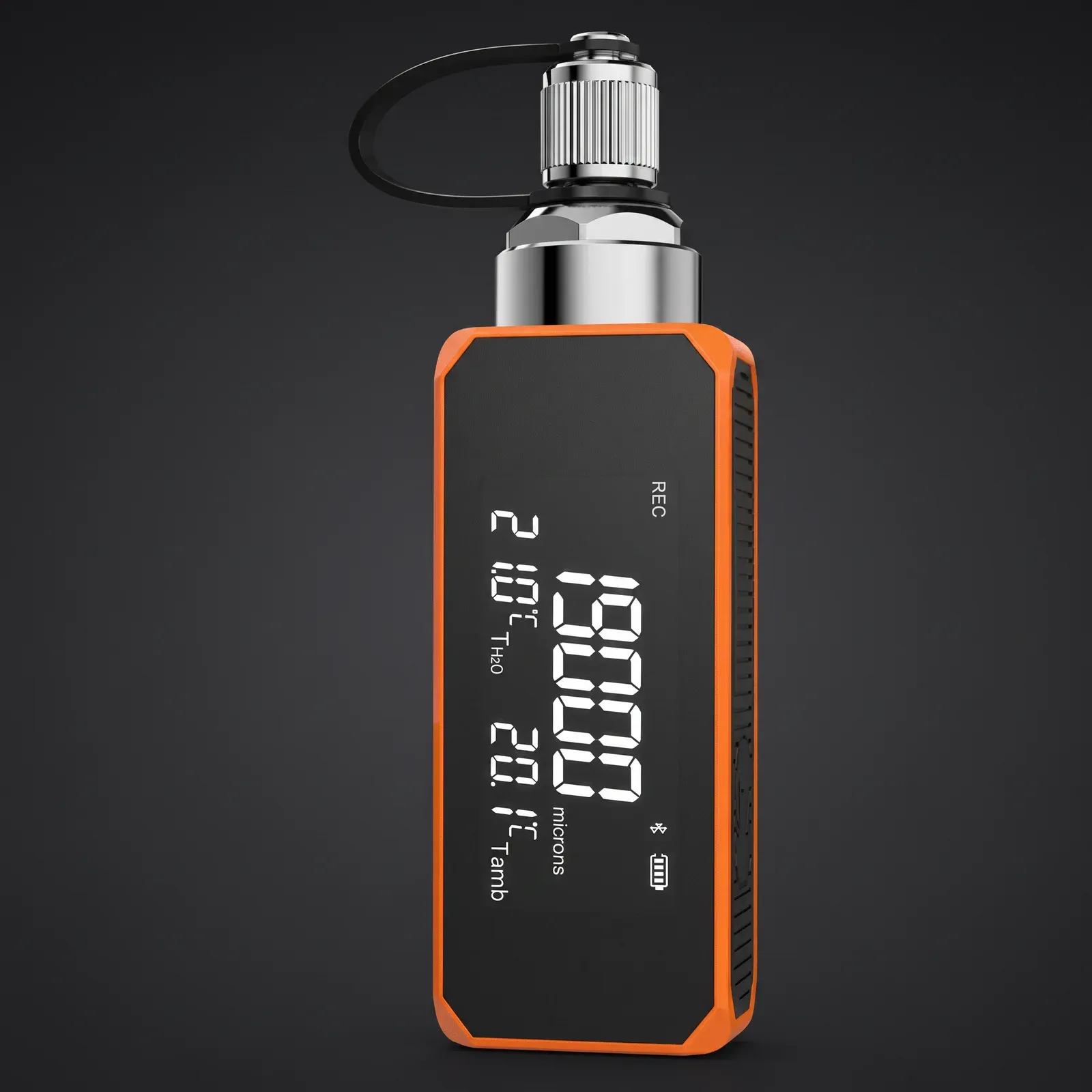
TL;DR: A digital HVAC vacuum gauge is a precision electronic instrument that measures absolute vacuum pressure down to single-digit microns during system evacuation. Essential for heat pump installations and refrigerant recovery, it verifies deep vacuum levels (below 500 microns) to prevent moisture contamination, protect synthetic POE oils, and ensure full compliance with UK F-Gas regulations and BS EN 378 standards.
Key Takeaways
- Precision is Non-Negotiable: Analogue manifold gauges cannot accurately register vacuum levels below 1,000 microns; consequently, a dedicated digital micron meter is essential for modern refrigeration and heat pump commissioning.
- Regulatory Compliance: Achieving a verified deep vacuum below 500 microns ensures strict compliance with UK F-Gas regulations (Regulation (EU) No 517/2014 as retained in UK law) and BS EN 378 standards.
- Sensor Tech Matters: Thermal conductivity sensors (Pirani sensors) deliver real-time, high-resolution measurements down to 1 micron, preventing acid formation and internal system corrosion.
- Workflow Integration: Inline 3-way isolation valves and 45° brass adapters eliminate leak points and prevent oil contamination during isolation and decay testing.
A digital HVAC vacuum gauge (also known as a digital micron gauge) is a specialized electronic instrument designed to measure absolute low-pressure vacuum levels inside heating, ventilation, air conditioning, and refrigeration (HVAC/R) systems. In modern engineering, system reliability hinges on proper evacuation. As the UK accelerates the installation of air-source heat pumps and low-GWP A2L refrigerants like R32 and R290, moisture control during commissioning has shifted from a best-practice recommendation to a strict operational standard. Water vapour left inside a sealed copper circuit reacts with synthetic POE (polyolester) oils, forming hydrofluoric acid that degrades motor windings and precipitates premature compressor failure.
According to field investigations conducted by the Building Services Research and Information Association (BSRIA), up to 70% of early-life compressor breakdowns in commercial cooling systems are directly traceable to unevacuated moisture and residual non-condensable gases. Furthermore, based on extensive laboratory and field testing by the engineering team at Tikto Precision, determining whether a system has reached atmospheric evacuation versus true deep vacuum requires measuring pressure down to the micron level—a feat impossible with traditional mechanical manifold gauges.
This guide breaks down how a digital HVAC vacuum gauge operates, why 1-micron resolution is vital for UK field technicians, and what key hardware configurations—such as isolation valves and angled fittings—separate commercial-grade instruments from entry-level digital meters.
How Does a Digital Vacuum Gauge Work vs Analogue Gauges?
Standard analogue manifold gauges rely on Bourdon tube mechanisms. These mechanical coils respond to macroscopic pressure changes, measuring vacuum in inches of mercury (inHg) or millibars (mbar). On a standard dial, the gap between 0 inHg (atmospheric pressure) and -30 inHg spans just a few millimetres. As a result, the critical range for deep evacuation—between 500 microns and 50 microns—occupies less than a hair’s breadth on an analogue faceplate.
In contrast, a digital HVAC vacuum gauge utilizes micro-electronic sensors—predominantly Pirani thermal conductivity sensors—to track absolute pressure. One micron equals 1/1,000th of a millimetre of mercury (0.001 mmHg) or 0.00133 mbar. At these ultra-low pressures, the gauge measures the heat loss rate from a microscopic heated wire to the surrounding gas molecules. As air and moisture are pulled out of the system by the vacuum pump, gas density drops, heat transfer decreases, and the sensor converts this physical state into an accurate digital micron reading.
| Measurement Scale | Atmospheric Pressure | Target Vacuum Level | Unacceptable Residual Vacuum |
|---|---|---|---|
| Microns (μm) | 760,000 μm | ≤ 500 μm (Hold at ≤ 500 μm) | > 1,000 μm |
| Millibars (mbar) | 1,013.25 mbar | 0.66 mbar | 1.33 mbar |
| Inches of Mercury (inHg) | 0 inHg (gauge) | -29.91 inHg | -29.86 inHg |
Because absolute zero press 0 microns, a digital micron meter provides an absolute measurement scale. Consequently, this allows engineers to verify not just air extraction, but the boiling point shift of liquid water inside the circuit. At 500 microns, the boiling point of pure water drops to -24°C, forcing standing moisture to vaporise and pull through the vacuum pump even during cold UK winter commissioning sessions.
What Features Should You Look for in a Professional Digital HVAC Vacuum Gauge?
Selecting the right digital vacuum gauge requires evaluating mechanical design, sensor protection, and workflow efficiency. UK engineers operating across residential, commercial, and NHS facility maintenance environments should evaluate instruments against the following parameters:
1. 1-Micron Resolution and High-Accuracy Sensors
Entry-level digital meters display increments of 50 or 100 microns. While acceptable for basic residential split-system check-outs, modern VRF/VRV installations and complex chillers require 1-micron resolution. Fine resolution lets engineers conduct dynamic decay testing—observing whether a system stabilizes at 350 microns or steadily creeps upward due to a micro-leak or outgassing moisture.
2. Integrated 3-Way Isolation Valves
A primary cause of vacuum test failure is gas bypass or oil contamination coming directly from the evacuation hose setup. In our testing at Tikto Precision, we observed that a digital vacuum gauge equipped with an integrated 3-way isolation valve allows the technician to isolate the sensor and vacuum pump from the refrigeration circuit without disconnecting hoses. Therefore, this enables an immediate, uncorrupted decay test (standing vacuum test) to verify system dryness and tightness.
3. 45° Brass Adapters and Fitting Flexibility
Service ports on wall-mounted mini-splits and compact commercial condensers are frequently recessed or positioned close to tight casing panels. Standard straight 1/4" SAE flare connections strain service valves or force engineers to add unnecessary adapter chains that introduce potential leak points. However, high-specification kits supply direct 45° adapters, ensuring secure connection to 1/4" and 5/16" service ports (common on R32 heat pumps) without stressing valve cores.
4. Sensor Cleanability and Oil Resistance
Vacuum sensors exposed to oil mist during rapid system pump-downs or back-seating mistakes can suffer drift or temporary sensor failure. Therefore, look for gauges designed with oil-catch baffles and cleanable Pirani sensor wells that can be rinsed with isopropyl alcohol on-site, restoring calibration without sending the unit back to a laboratory.
What Are the UK Regulatory Standards for HVAC Vacuum Evacuation?
According to UK guidelines under F-Gas Regulation (EU) No 517/2014 (retained in UK law) and British Standard BS EN 378, evacuation is a mandatory phase of system installation and maintenance. Compliance requires demonstrating that moisture and non-condensable gases have been thoroughly removed prior to introducing refrigerant.
Based on field benchmarking by Tikto Precision, achieving a sustained deep vacuum below 500 microns—and passing a 10-to-15-minute standing decay test without exceeding 1,000 microns—proves system integrity. Consequently, documenting these digital micron readings protects engineers during F-Gas audits and guarantees long-term compressor reliability across UK commercial and residential climate control systems.
Frequently Asked Questions
What is a digital HVAC vacuum gauge used for?
A digital HVAC vacuum gauge measures absolute pressure down to single microns during system evacuation. It verifies that water vapour and non-condensable gases are completely removed before charging refrigerant, preventing acid formation and equipment failure.
What micron level indicates a proper HVAC vacuum?
According to industry standards and UK F-Gas guidelines, a system should be evacuated down to at least 500 microns and must maintain a level below 1,000 microns after being isolated during a decay test.
Why can't I rely on standard analogue gauges for vacuum testing?
Analogue gauges measure relative pressure using mechanical Bourdon tubes and cannot resolve differences below 1,000 microns. A digital vacuum gauge provides accurate absolute pressure readings with 1-micron resolution.
Ready to upgrade your vacuum setup with Tikto Precision?
Explore Kits — £141.99